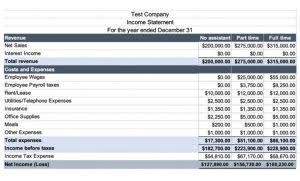
Inaccurate financial records can result in misinformed strategic planning and forecasting, potentially leading to detrimental outcomes for the organization. These errors often result from inadvertently swapping digits when recording numerical data, such as in accounting or financial reports. The repercussions of such errors can potentially misrepresent the financial health of an entity, affecting its ability to make informed strategic decisions. If the entry is occurring in data capture forms, databases or subscription forms, the designer of the forms should use input masks or validation rules.
Use Technology to Help Catch Errors
If they are unequal, you can go back to recording transactions your journal entries to find where the error originates from. Transposition errors may sound like a complex financial term, but they are actually quite common and have significant implications for businesses and individuals alike. In this comprehensive guide, we will explore the definition of transposition errors, their common types, causes, and consequences. We will delve into how these errors can impact financial statements, company finances, and even lead to legal issues.
How Do You Know If You Have a Transposition Error?

Finally, transposition errors can lead to catastrophic consequences, especially if they happen to involve medicinal dosing. A transposition error in finance refers to a mistake made when recording numerical data, in which digits are accidentally switched or reversed. This can result in incorrect financial statements, calculations, or reports. The repercussions extend to operational inefficiencies, as rectifying these errors demands valuable time and resources. As a result, proactive detection and prevention of transposition errors are vital for maintaining the integrity of financial records and ensuring effective financial management within banking operations. These errors can occur when users input the wrong numerical figures into accounting software, which can then propagate through various financial statements and reports.
What Does Transposition Error Mean?

We will discuss methods for identifying and correcting transposition errors, along with real-life examples in the finance industry. We will provide practical tips for avoiding these errors in the first place. By the end of this article, you will have a solid understanding of transposition errors and be equipped with the knowledge to prevent and address them effectively. A transposition error in a trial balance occurs when two digits in a number are accidentally reversed or swapped when recording a transaction. This type of mistake what is a transposition error results in the trial balance not balancing because the incorrect amounts are recorded on either the debit or credit side.
A transposition error occurs when two digits are “transposed” (swapped) in an entry. This type of error commonly happens in accounting and data entry processes and can be especially tricky to spot given that the number may still seem plausible on a cursory glance. However, human error is an inevitable factor, and one common type of error is the transposition error. This occurs when two adjacent digits in a number are accidentally switched, leading to an incorrect value.
- It goes without saying that over or under-compensation doesn’t look good on the books, but it’s also not good for rapport within your organization.
- However, spotting the error is difficult when it has occurred in both the debit and the credit entries as the trial balance would still balance.
- A two-percent increase in unemployment leads to a 78 percent chance of a directive not being transposed on time.
- For example, in accounting, when a bookkeeper manually enters data into a ledger, they may, by mistake, incorrectly transfer information from an invoice into a balance sheet.
- Generally, businesses prepare trial balances at the end of each reporting period.
- By understanding this concept, tech enthusiasts and professionals alike gain a powerful tool for error detection and a deeper appreciation for the underlying structure of numbers in our digital world.
These errors can result from the mistyping or incorrect recording of numbers, leading to misreported financial data. Such discrepancies not only undermine the reliability of balance sheets but also compromise the audit trail, potentially raising concerns during regulatory inspections. The meticulous scrutiny of financial records allows for a thorough examination of entries, ensuring that any transposition errors are promptly identified and rectified. These errors can lead Bookkeeping for Startups to misstated financial statements, incorrect allocation of expenses, and flawed budgetary decisions.

A transposition error occurs when the first two digits of a number are switched, creating a difference that is evenly divisible by nine. A nontransposition error pattern in transposition error can be described by similar examples. Modern accounting tools often highlight discrepancies or changes, making transposition errors easier to track.
- Mistakes happen, especially when it comes to recording transactions in your books.
- When reviewing the trial balance or financial statements, you’ll notice an imbalance between debits and credits.
- To spot the errors, find the difference between the recorded amount and the correct amount.
- Since the difference is divisible by 9, this indicates a transposition error.
- Additionally, you may want to reconcile bank statements with accounting records every month.
- These three methods use a single check digit and will therefore fail to capture around 10% of more complex errors.
For example, in accounting, when a bookkeeper manually enters data into a ledger, they may, by mistake, incorrectly transfer information from an invoice into a balance sheet. Transposition errors may also occur when checks are filled out incorrectly, resulting in improper payment amounts that can cause overdrafts and other banking issues. Furthermore, transportation errors can result in incorrectly-recorded phone numbers, street addresses, or ZIP codes in customer profiles. And although the aforementioned mistakes are typically easily remedied, in some cases, transposition errors relating to medicinal dosing information may lead to tragic consequences. This type of journal entry is called a “correcting entry.” Correcting entries adjust an accounting period’s retained earnings i.e. your profit minus expenses. Correcting entries are part of the accrual accounting system, which uses double-entry bookkeeping.
The Importance of Identifying Transposition Errors
Transposition errors may be small in nature but can cause major disruptions if left unchecked. Whether you’re managing a ledger, reconciling bank statements, or processing invoices, staying vigilant against number-swapping mistakes is essential. In this article, we’ll define transposition errors, provide examples, explain how to detect and correct them, and share best practices to avoid them entirely. Transposition errors, while seemingly insignificant, can have a profound impact on data accuracy and decision-making.